
Multi-Storey Steel Structure Stadium
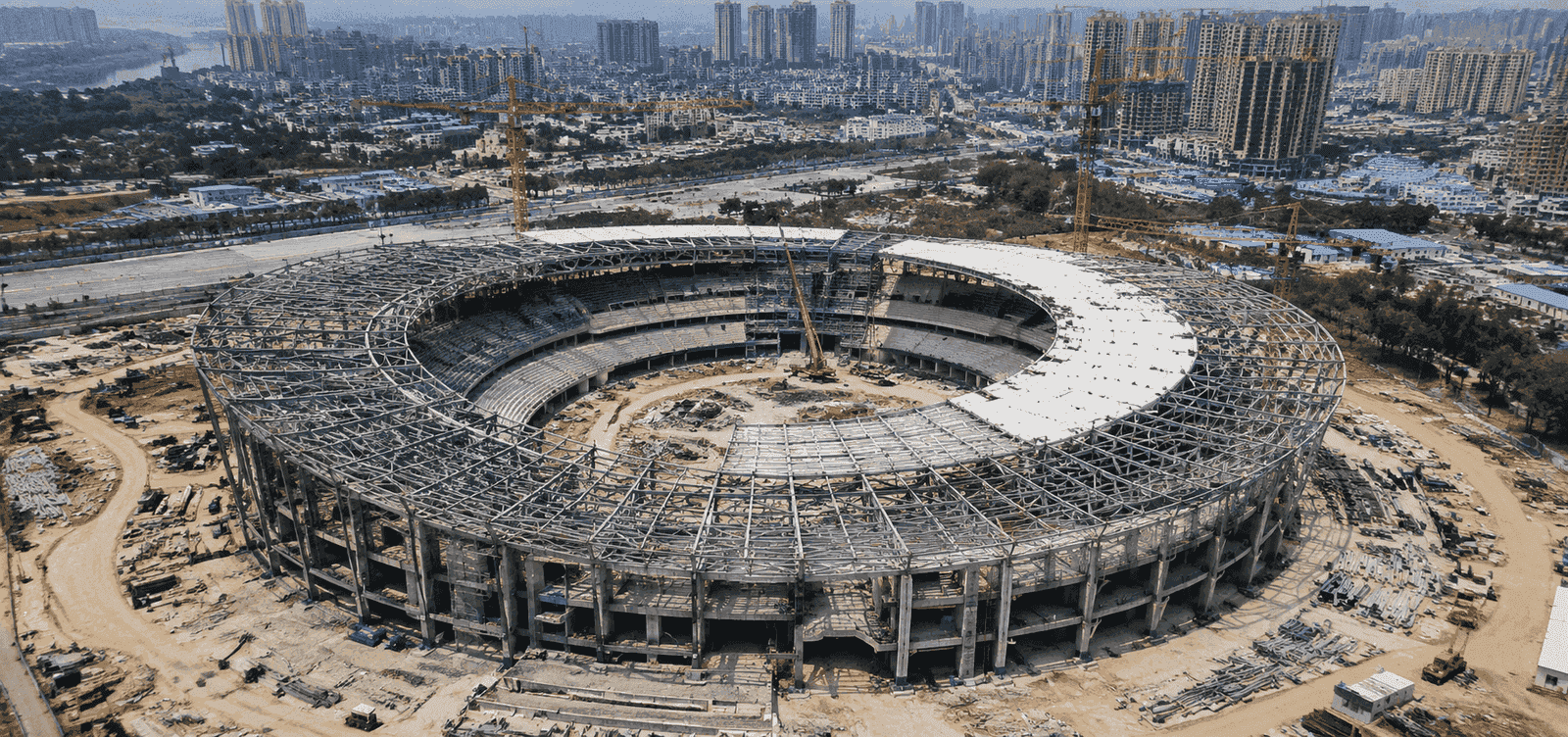
Steel structure stadium solution for large grandstands, long-span roof systems, sports centers, and multi-purpose public venues.
Product Details
Product Description
Multi-storey steel structure stadiums are steel structure solutions for large public buildings and complex spatial architecture.
They are suitable for football stadiums, comprehensive sports arenas, training centers, urban sports centers, event grandstands, large performance venues, exhibition activity centers, and multi-purpose public building projects.
These buildings usually feature large spans, multiple levels, many components, complex nodes, and high installation accuracy requirements.
Compared with ordinary steel warehouses or single-storey industrial plants, they place greater emphasis on structural stability, space utilization efficiency, audience circulation, roof coverage performance, and long-term safety.
Stadium steel structures generally include multi-level grandstand support systems, circular main beams, box columns, H-section steel beams, steel tube trusses, space frames, roof support systems, purlin systems, connection nodes, and peripheral enclosure structures.
According to the architectural form and use function, they can be designed as open stadiums, semi-enclosed stadiums, roofed grandstand stadiums, or integrated multi-purpose venues.
The structural scheme can be customized according to architectural drawings, renderings, functional zoning, seating capacity, roof coverage range, local wind load, snow load, seismic level, and construction conditions.
During the design stage, we carry out structural detailing according to the actual project use, including main force system analysis, beam-column node design, roof truss layout, grandstand structural connection methods, component segment transportation planning, site lifting sequence, and installation node optimization.
For large-span stadium projects, the roof structure must balance lightweight design and load-bearing capacity, reducing self-weight while ensuring wind resistance, seismic performance, and overall stability.
For multi-level grandstand areas, floor loading, crowd circulation, structural stiffness, vibration control, and follow-up decoration and equipment installation conditions must be carefully considered.
In fabrication, main steel components can use H-section steel, box columns, steel tube trusses, round tubes, square tubes, composite beams, and space frame members.
The factory processes materials according to detailed drawings through nesting, lofting, cutting, assembly, welding, correction, drilling, grinding, anti-corrosion treatment, numbering, and packing.
Large components usually use CNC cutting and mechanical processing to ensure dimensional accuracy, while key node locations are manually checked and adjusted to ensure hole positions, grooves, welds, and connection plates meet installation requirements.
Welding is an important part of stadium steel structure fabrication. For main beams, box columns, truss nodes, and load-bearing connection areas, proper welding methods are selected according to component thickness, weld form, and structural requirements.
Production usually includes pre-weld cleaning, groove preparation, tack welding, segmented welding, post-weld grinding, and deformation correction.
For complex nodes, manual welding and hand grinding remain important, especially at irregular components, curved beams, space truss connection points, and multi-angle nodes, where experienced workers handle details to ensure appearance, connection accuracy, and site assembly quality.
For surface treatment, sand blasting, anti-rust primer, intermediate paint, finish paint, hot-dip galvanizing, or other anti-corrosion systems can be selected according to the project environment.
For coastal areas, high-humidity areas, or stadium projects exposed outdoors for a long time, the anti-corrosion grade requires special attention. Before coating, surfaces are cleaned and derusted, and welds, edges, corners, and connection plate areas are carefully inspected to reduce later corrosion risk.
For public building projects requiring better appearance, paint color, coating thickness, and surface finish can also be controlled according to the architectural design.
To improve site installation efficiency, complex stadium steel structure projects usually require component numbering, zone-based packing, and installation sequence planning. Each component can be numbered by axis, floor, area, and lifting sequence for quick identification and installation on site.
Oversized, extra-wide, or irregular components can be reasonably segmented according to container transport, bulk shipment, or site lifting conditions to reduce transportation and installation difficulty.
When necessary, the factory can also conduct trial assembly checks for key nodes to identify hole deviation, connection plate direction, and node fit issues in advance, reducing rework risk on site.
This type of steel structure stadium offers fast construction, high structural strength, large spatial span, strong adaptability to architectural forms, and convenient later maintenance.
Compared with traditional concrete structures, steel structures are more suitable for large-span roofs, multi-level grandstands, open spaces, and complex architectural shapes.
For large public projects requiring fast construction, mixed functions, and modern appearance, steel structures can effectively shorten the construction period and provide more flexible installation conditions for later mechanical and electrical systems, seating, curtain walls, roof panels, drainage systems, lighting systems, and commercial supporting spaces.
We can provide comprehensive services according to client project requirements, including scheme communication, structural design, detailed drawings, steel component fabrication, welding production, surface treatment, numbered packing, export loading, and installation guidance documents.
Clients may provide renderings, layout drawings, structural drawings, or basic dimensional requirements, and we will combine local climate conditions, building codes, use functions, and budget requirements to provide a more practical multi-storey stadium steel structure solution.
Product Gallery
Applications
Stadiums, football fields, comprehensive sports arenas, training centers, event grandstands, urban sports centers, large public event venues, multi-purpose performance venues, public sports facilities, school sports centers, and sports buildings supporting commercial complexes.
Standards
Main structure: H-section steel, box columns, steel tube trusses, composite steel beams, and space frame structures. Roof system: long-span steel trusses, space frames, metal roof panels, membrane roof systems, or other customized roof systems. Grandstand structure: multi-storey steel grandstands combined with concrete slabs, steel deck composite floors, or specified floor systems. Connections: high-strength bolt connections combined with welded nodes. Anti-corrosion treatment: sand blasting, anti-corrosion paint, hot-dip galvanizing, or customized treatment according to project environment. Component fabrication: CNC cutting, assembly, welding, correction, drilling, grinding, numbering, and packing. Design basis: structural design according to local wind load, snow load, seismic level, and building codes. Delivery scope: steel structure detailed design, component fabrication, numbered packing, export loading, installation guidance documents, and technical support.
Related Products
Multi-layer industrial steel structure building structure, suitable for shopping malls and commercial purposes
Multi-storey steel structure system for industrial, commercial and mixed-use building projects.
Commercial Buildings
Commercial steel building solution for multi-storey and mixed-use developments.
Steel Structure Showroom Building for Cars and Multi-Purpose Display Use
Modern multi-storey steel structure showroom with elegant appearance and open interior space, suitable for car display, brand exhibition, product presentation, and commercial showcase use.