
Future growth prospects and market demand for steel warehouses
发布于 2026年1月20日
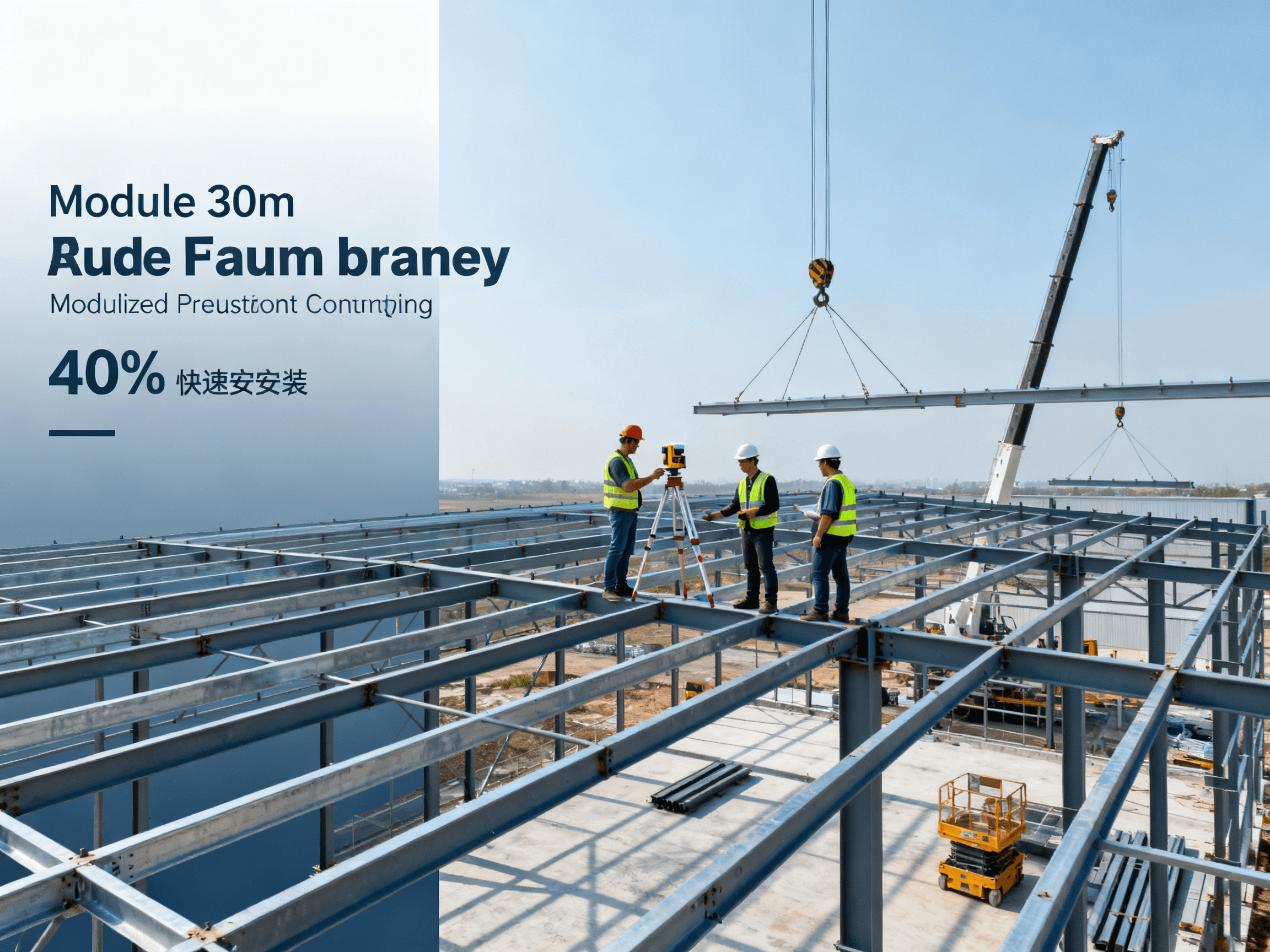
Future Growth Prospects and Market Demand for Steel Warehouses
The global steel warehouse market is projected to grow at a steady CAGR of 4.8% through 2026, driven by e-commerce expansion, manufacturing reshoring trends, and cold storage demand. Key decision factors for investors include structural adaptability (clear-span capabilities over 30m), compliance with regional seismic/wind codes (IBC, EN 1993), and total cost of ownership (material + erection costs). The shift toward prefabricated modular systems now represents 62% of new industrial construction in developed markets, with Asia-Pacific emerging as the fastest-growing region due to logistics infrastructure development.
Three Strategic Scenarios for Steel Warehouse Adoption
Scenario 1: E-Commerce Fulfillment Center Expansion
With global e-commerce sales expected to reach $8.1 trillion by 2026, operators require warehouses with 12-15m eave heights for automated storage systems. Steel structures outperform alternatives with 40% faster erection times and column-free spans up to 60m. Critical evaluation points include:
- Floor load capacity (minimum 5 kN/m² for robotic systems)
- Future expansion provisions (modular bolt-on extensions)
- Energy efficiency (insulated panel U-values below 0.28 W/m²K)
Scenario 2: Cold Chain Logistics Modernization
The $647 billion cold storage market demands structures maintaining -25°C to +15°C ranges. Steel framing enables:
- Thermal break technology achieving R-30 insulation values
- Hygienic interior surfaces (food-grade polyurethane coatings)
- Condensation control through vapor barrier integration
Risk mitigation requires third-party validation of thermal performance testing per ISO 6946 standards.
Scenario 3: Manufacturing Facility Upgrades
Industrial users prioritize crane runway systems (10-50 ton capacity) and vibration damping. Steel buildings offer:
- Pre-engineered crane beams with ±2mm dimensional tolerance
- Vibration frequency control below 8Hz for precision equipment
- Chemical-resistant epoxy coatings for harsh environments
Industry Implementation Pathways
Mainstream approaches include turnkey design-build (78% market share) and modular component systems. For projects requiring:
- Multi-national code compliance (GB + ASTM + EN)
- Integrated material traceability (MTC documentation)
- BIM Level 2 coordination
Decision Framework
- If requiring rapid deployment (under 12 weeks), prefabricated steel systems typically outperform cast-in-place concrete by 3:1 time advantage
- When seismic zone factors exceed 0.3g, moment-resisting frames should be specified with at least 3% of gross area as bracing
- For ROI calculations, consider steel's 50-year service life versus 30-35 years for alternative materials
Professional recommendation: Validate potential suppliers' CE Marking through EU Notified Body registration checks (NANDO database) and request sample weld test reports per AWS D1.1/D1.8 standards before commitment.